Table of Contents
ToggleDrones examples range from backyard hobbyist quadcopters to advanced military surveillance systems. These unmanned aerial vehicles (UAVs) have transformed industries across the globe. In 2024, the global drone market reached an estimated $30 billion, and growth shows no signs of slowing. Whether capturing stunning aerial footage, delivering medical supplies, or monitoring crop health, drones serve countless purposes. This article explores the most common drone types and their real-world applications. Understanding these drones examples helps illustrate how this technology shapes everyday life and critical operations alike.
Key Takeaways
- Drones examples span consumer, commercial, military, and agricultural applications—from photography quadcopters to crop-spraying UAVs.
- Consumer drones for photography and FPV racing remain the most accessible drones examples, with models ranging from $100 to $2,000.
- Commercial drone delivery services like Amazon Prime Air and Zipline have moved from experimental to fully operational, transforming last-mile logistics.
- Military drones handle reconnaissance, surveillance, and combat operations, though they raise ongoing ethical debates about autonomous weapons.
- Agricultural drones enable precision farming by monitoring crop health and applying treatments to specific areas, reducing costs and environmental impact.
- Conservation organizations use drones for wildlife monitoring, anti-poaching patrols, and reforestation efforts, planting thousands of trees per day.
Consumer Drones for Photography and Recreation
Consumer drones represent the most recognizable drones examples for the average person. These compact, user-friendly UAVs have become popular tools for hobbyists, content creators, and families.
Photography and Videography
Aerial photography drones have revolutionized how people capture memories and create content. Models like the DJI Mini 4 Pro and Autel Evo Lite+ offer 4K video recording, gimbal stabilization, and obstacle avoidance. Wedding photographers now routinely use drones to capture sweeping venue shots. Real estate agents showcase properties with dramatic aerial perspectives. Travel vloggers film breathtaking landscapes from angles previously impossible without helicopters.
These drones examples typically cost between $300 and $2,000. They feature flight times of 20 to 45 minutes and can operate up to several miles from the controller.
Racing and FPV Drones
First-person view (FPV) racing drones offer a completely different experience. Pilots wear goggles that display a live feed from the drone’s camera. They race through obstacle courses at speeds exceeding 100 mph. The Drone Racing League has professionalized this sport, attracting sponsors and broadcasting events globally.
FPV freestyle drones also let pilots perform acrobatic maneuvers through urban environments and natural landscapes. These drones examples prioritize speed and agility over camera quality. Enthusiasts often build custom rigs to achieve specific performance characteristics.
Toy and Educational Drones
Entry-level drones provide affordable options for beginners and children. Products like the Holy Stone HS210 and Ryze Tello cost under $100. They help new pilots learn basic controls before investing in more expensive equipment. Many educational drones also teach programming concepts, allowing students to code flight patterns and automated behaviors.
Commercial and Industrial Drone Applications
Commercial drones examples demonstrate how businesses leverage UAV technology to improve efficiency and reduce costs. These applications span multiple industries.
Delivery Services
Drone delivery programs have moved from experimental to operational. Amazon Prime Air delivers packages under five pounds within 30 minutes in select areas. Wing, a subsidiary of Alphabet, operates delivery services in parts of Texas, Virginia, and Australia. Zipline has delivered over 1 million medical products via drone in Rwanda and Ghana.
These drones examples address last-mile delivery challenges. They reduce traffic congestion and carbon emissions compared to traditional delivery vehicles. Regulatory frameworks continue evolving to accommodate expanded drone delivery networks.
Infrastructure Inspection
Drones now inspect bridges, power lines, pipelines, and cell towers. Traditional inspections required scaffolding, rope access technicians, or helicopter crews. Drone inspections cost a fraction of these methods and pose fewer safety risks to workers.
Utility companies use thermal imaging drones to detect electrical faults before they cause outages. Oil and gas firms monitor pipeline integrity across thousands of miles. Wind turbine operators check blade conditions without taking turbines offline. These drones examples save companies millions in maintenance costs and prevent catastrophic failures.
Construction and Surveying
Construction sites use drones for surveying, progress monitoring, and volumetric measurements. A drone can map a 100-acre site in under an hour. Traditional surveying would require days of ground-based work.
Software platforms process drone imagery into 3D models, orthomosaic maps, and point clouds. Project managers compare as-built conditions against design plans. They identify discrepancies early and reduce costly rework. These drones examples have become standard practice for major construction firms worldwide.
Military and Defense Drones
Military drones examples represent some of the most advanced and controversial UAV applications. Armed forces around the world rely on unmanned systems for reconnaissance, surveillance, and combat operations.
Reconnaissance and Surveillance
Intelligence-gathering drones provide real-time battlefield awareness without risking pilot lives. The RQ-4 Global Hawk can fly at 60,000 feet for over 30 hours. It captures high-resolution imagery and signals intelligence across vast areas. Smaller tactical drones like the RQ-7 Shadow support ground units with persistent surveillance.
These drones examples have changed military strategy. Commanders receive continuous intelligence feeds that inform tactical decisions. Soldiers carry hand-launched drones like the RQ-11 Raven to scout enemy positions before engagements.
Armed Combat Drones
Strike-capable drones conduct precision attacks on enemy targets. The MQ-9 Reaper carries Hellfire missiles and laser-guided bombs. It has conducted operations across the Middle East and Africa. The Turkish Bayraktar TB2 gained attention during the 2020 Nagorno-Karabakh conflict and subsequent operations.
These drones examples raise ethical questions about autonomous weapons and civilian casualties. International bodies continue debating regulations governing armed UAV use. Even though controversies, military investment in drone technology continues growing.
Counter-Drone Systems
As drones proliferate, so do systems designed to defeat them. Counter-drone technology includes electronic jamming, GPS spoofing, directed energy weapons, and kinetic interceptors. Military bases and critical infrastructure deploy these systems to protect against hostile UAVs. This creates an ongoing technological competition between drone capabilities and countermeasures.
Agricultural and Environmental Drones
Agricultural drones examples show how UAVs support food production and environmental conservation. These applications offer practical benefits for farmers and researchers alike.
Precision Agriculture
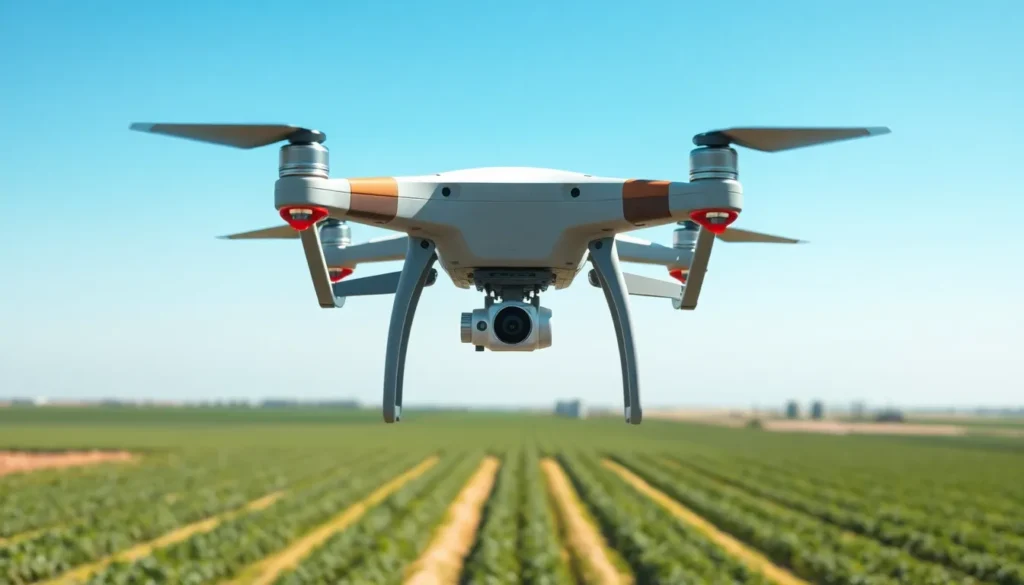
Farmers use drones to monitor crop health across large fields. Multispectral cameras detect plant stress before visible symptoms appear. Farmers can then target irrigation, fertilizer, or pesticide applications to specific areas. This precision reduces input costs and environmental impact.
Spray drones apply fertilizers and pesticides directly to crops. The DJI Agras T40 can treat 50 acres per hour. These drones examples work in conditions where traditional equipment struggles, such as steep hillsides or wet fields. They reduce operator exposure to chemicals compared to ground-based spraying.
Livestock Monitoring
Ranchers use drones to check on herds across expansive properties. A single flight can locate and count animals that would require hours of horseback riding to find. Thermal cameras help identify sick animals by detecting elevated body temperatures. These drones examples reduce labor requirements and improve animal welfare through faster intervention.
Environmental Monitoring and Conservation
Conservation organizations deploy drones to monitor wildlife populations and detect poaching activity. Anti-poaching teams in Africa use thermal imaging drones to patrol protected areas at night. Marine biologists count whale populations and study migration patterns using aerial surveys.
Environmental agencies map deforestation, track wildfire progression, and assess flood damage. Drones equipped with air quality sensors monitor pollution levels in urban and industrial areas. These drones examples provide data that informs environmental policy and conservation strategies.
Reforestation Efforts
Some organizations use drones to plant trees at scale. Seed-dropping drones can plant thousands of trees per day across terrain inaccessible to humans. Companies like DroneSeed have reforested areas damaged by wildfires in the western United States. These drones examples offer hope for accelerating ecosystem restoration.