Table of Contents
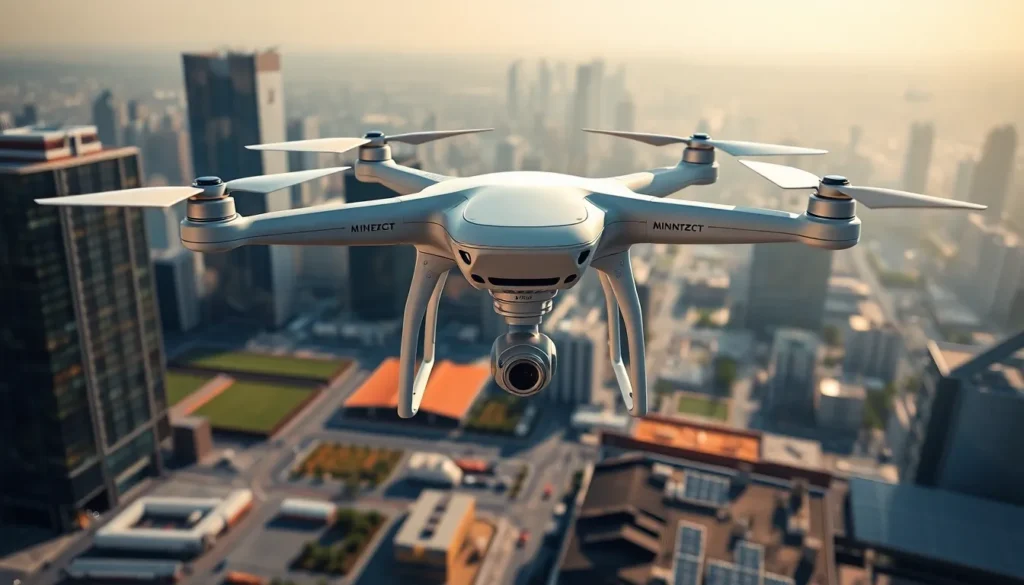
ToggleDrone trends 2026 point to a year of major shifts in how industries use unmanned aerial vehicles. From smarter autonomous systems to tighter regulations, the drone landscape is set to change fast. Businesses and hobbyists alike should pay attention, new technology, expanded applications, and sustainability efforts will shape what’s possible with drones in the coming months. This article breaks down the key drone trends 2026 will bring and explains why they matter.
Key Takeaways
- Drone trends 2026 highlight major advancements in autonomous flight, including better obstacle detection and multi-drone coordination for safer, faster missions.
- Commercial drone applications are expanding rapidly across delivery services, agriculture, construction, and insurance inspections.
- New FAA and EASA regulations will enable beyond visual line of sight (BVLOS) operations while requiring remote identification for improved accountability.
- AI-powered features like object recognition, automated data analysis, and predictive maintenance are becoming standard on drones in 2026.
- Sustainability innovations—including solid-state batteries, lighter materials, and solar-assisted models—are extending flight times and reducing environmental impact.
- Businesses that stay informed on drone trends 2026 and comply with evolving regulations will gain a competitive advantage in adopting this technology.
Advancements in Autonomous Flight Technology
Autonomous flight technology will take a significant leap forward in 2026. Drones are becoming smarter, capable of making real-time decisions without constant human input. This shift matters for industries that rely on quick, accurate aerial operations.
Several improvements drive this trend:
- Better obstacle detection: New sensor arrays allow drones to identify and avoid objects more reliably, even at high speeds.
- Improved GPS-denied navigation: Drones can now operate in areas where GPS signals are weak or unavailable, using visual and inertial systems instead.
- Multi-drone coordination: Fleets of drones can work together on tasks like search and rescue or large-scale inspections without colliding or duplicating efforts.
These drone trends 2026 will bring mean fewer crashes, faster missions, and more trust from businesses considering drone adoption. Companies in logistics, agriculture, and emergency services stand to benefit most. Autonomous flight isn’t just about convenience, it’s about reliability and safety at scale.
Expanding Commercial and Industrial Applications
Commercial and industrial drone use is set to grow rapidly in 2026. Businesses are finding new ways to put drones to work, and the results speak for themselves.
Delivery services continue to expand. Retail giants and healthcare providers are testing drone delivery for packages and medical supplies. In rural areas, drones can reach customers faster than ground vehicles.
Agriculture remains a major growth sector. Farmers use drones to monitor crop health, spray fields, and map terrain. These tasks used to take hours on foot or by tractor, drones finish them in minutes.
Construction and infrastructure inspection is another hot spot. Drones survey job sites, check bridges, and inspect power lines without putting workers at risk. Insurance companies are also using drones to assess property damage after storms.
Drone trends 2026 show a clear pattern: industries want faster data, lower costs, and safer operations. Drones deliver on all three. Expect to see more pilot programs turn into full-scale deployments this year.
Evolving Regulations and Airspace Integration
Regulations around drones are changing quickly. Governments worldwide are working to balance innovation with public safety, and 2026 will see important updates.
In the United States, the Federal Aviation Administration (FAA) is expanding rules for beyond visual line of sight (BVLOS) operations. This change allows drones to fly farther from their operators, opening up new commercial possibilities. The European Union Aviation Safety Agency (EASA) is rolling out similar frameworks.
Remote identification requirements are also becoming standard. Drones must broadcast their location and operator information, much like a license plate on a car. This helps authorities track unauthorized flights and improves accountability.
Airspace integration is another focus. Unmanned traffic management (UTM) systems are being tested in major cities. These platforms coordinate drone flights with manned aircraft, reducing collision risks.
Drone trends 2026 include a push for clearer, more consistent rules. Operators who stay informed and compliant will have an advantage. Confusion over regulations has slowed adoption in the past, standardized rules should speed things up.
AI-Powered Features and Enhanced Capabilities
Artificial intelligence is transforming what drones can do. In 2026, AI-powered features will become standard on many commercial and consumer models.
Object recognition is improving. Drones can now identify specific items, people, or animals in real time. This capability is useful for security patrols, wildlife monitoring, and industrial inspections.
Automated data analysis saves time. Instead of reviewing hours of footage manually, operators can let AI flag points of interest. Cracks in a bridge, weeds in a field, or intruders on a property, AI spots them faster than a human could.
Predictive maintenance is also gaining traction. Drones equipped with AI can monitor their own systems and alert operators to potential failures before they happen. This reduces downtime and repair costs.
Voice and gesture controls are becoming more reliable, too. Operators can direct drones with simple commands, making them easier to use in the field.
Drone trends 2026 show AI as a key differentiator. Models with smarter software will outperform those without. Buyers should look for drones that offer upgradeable AI features to stay current.
Sustainability and Energy Efficiency Innovations
Sustainability is a growing priority in the drone industry. Manufacturers are under pressure to reduce environmental impact, and 2026 will bring noticeable progress.
Battery technology is advancing. New lithium-sulfur and solid-state batteries offer longer flight times and faster charging. Some companies are experimenting with hydrogen fuel cells for even greater range.
Lighter materials help drones use less energy. Carbon fiber composites and advanced plastics reduce weight without sacrificing durability. Lighter drones fly longer on the same charge.
Solar-assisted drones are entering the market. These models use photovoltaic panels to extend flight time during daylight hours. They’re especially useful for long-duration surveillance and environmental monitoring.
Recycling programs are also expanding. Manufacturers are designing drones with end-of-life recycling in mind, using fewer hazardous materials and making components easier to disassemble.
Drone trends 2026 reflect a broader shift toward greener technology. Companies that prioritize sustainability will appeal to environmentally conscious customers and may face fewer regulatory hurdles.