Table of Contents
ToggleDrones have changed how people capture images, deliver packages, and monitor crops. These unmanned aerial vehicles (UAVs) now serve hobbyists, businesses, and government agencies worldwide. Whether someone wants to film stunning aerial footage or inspect a building roof, drones offer practical solutions that were once impossible or extremely expensive.
This guide covers everything readers need to know about drones. It explains how drones work, the different types available, and their most popular applications. The guide also addresses regulations, safety guidelines, and tips for choosing the right drone. By the end, readers will have a solid understanding of these flying machines and their potential uses.
Key Takeaways
- Drones are unmanned aerial vehicles used for photography, agriculture, construction, search and rescue, delivery, and recreation.
- Most consumer drones use a multi-rotor design (quadcopters), offering excellent hovering capabilities ideal for beginners and professionals.
- In the U.S., the FAA requires drone registration for models over 0.55 pounds and commercial operators must obtain a Remote Pilot Certificate.
- When choosing a drone, consider your purpose, budget, flight time, camera quality, portability, and built-in safety features.
- Fixed-wing drones offer longer flight times (over an hour) and greater range, making them ideal for covering large agricultural or survey areas.
- Always follow safety guidelines: fly below 400 feet, keep drones in visual line of sight, and avoid airports, crowds, and restricted airspace.
What Are Drones and How Do They Work
A drone is an aircraft that operates without a human pilot onboard. Instead, an operator controls it remotely or programs it to fly autonomously. The term “drone” originally referred to military aircraft, but it now describes any unmanned aerial vehicle.
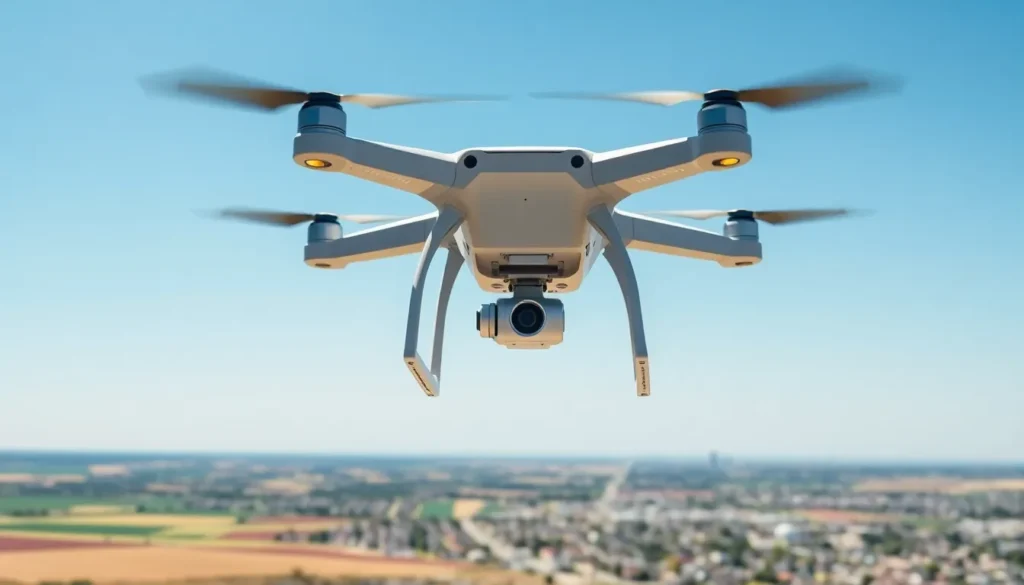
Most consumer drones use a multi-rotor design. These drones have four, six, or eight propellers mounted on arms extending from a central body. The propellers spin at different speeds to control altitude, direction, and stability. Four-rotor models, called quadcopters, remain the most common choice for beginners and professionals alike.
Drones rely on several key components to fly. A flight controller acts as the brain, processing input from sensors and the remote control. GPS modules help drones maintain position and return home if they lose signal. Accelerometers and gyroscopes detect movement and orientation. Batteries, typically lithium polymer (LiPo), provide power for flights lasting anywhere from 15 to 45 minutes.
The remote controller sends commands to the drone via radio signals. Many modern drones also connect to smartphones or tablets through dedicated apps. These apps display live camera feeds, flight data, and control settings. Some advanced drones can follow subjects automatically, avoid obstacles, and execute pre-programmed flight paths.
Common Types of Drones
Drones come in several categories based on their design and purpose. Each type offers distinct advantages for specific applications.
Multi-Rotor Drones
Multi-rotor drones dominate the consumer market. Quadcopters, hexacopters, and octocopters fall into this category. They excel at hovering, making them ideal for photography and videography. But, they typically have shorter flight times and limited range compared to fixed-wing models.
Fixed-Wing Drones
Fixed-wing drones look like traditional airplanes. They use wings to generate lift rather than rotors. This design allows longer flight times, sometimes over an hour, and greater distances. Farmers and surveyors often choose fixed-wing drones to cover large areas efficiently. The downside? They cannot hover and need space to take off and land.
Single-Rotor Drones
Single-rotor drones resemble helicopters. They feature one large main rotor and a smaller tail rotor for stability. These drones can carry heavier payloads and fly longer than multi-rotor models. Professionals use them for aerial LIDAR surveys and heavy-lift applications.
Hybrid VTOL Drones
Hybrid vertical take-off and landing (VTOL) drones combine features of multi-rotor and fixed-wing designs. They take off and land vertically like a quadcopter but transition to horizontal flight like an airplane. This versatility makes them valuable for long-range missions that require precise landing capabilities.
Popular Uses for Drones Today
Drones serve countless purposes across industries. Their versatility continues to expand as technology improves.
Photography and Videography
Drones have revolutionized aerial photography. Filmmakers, real estate agents, and wedding photographers use them to capture stunning perspectives. A quality camera drone can shoot 4K video and high-resolution photos that previously required expensive helicopter rentals.
Agriculture
Farmers deploy drones to monitor crop health, spray pesticides, and assess irrigation needs. Multispectral cameras on agricultural drones detect plant stress before it becomes visible to the human eye. This technology helps farmers increase yields while reducing chemical use.
Construction and Inspection
Construction companies use drones for site surveys, progress monitoring, and safety inspections. Inspectors fly drones to examine bridges, power lines, and rooftops without climbing dangerous structures. This approach saves time and reduces risk.
Search and Rescue
Emergency responders use drones equipped with thermal cameras to locate missing persons. Drones can cover large search areas quickly and access terrain that ground teams cannot reach. They’ve proven invaluable in disaster response scenarios.
Delivery Services
Companies like Amazon and UPS have tested drone delivery programs. While regulatory hurdles remain, drones may soon deliver packages, medications, and food to homes and businesses. Rural areas stand to benefit most from this technology.
Recreation
Plenty of people fly drones simply for fun. Racing drones through obstacle courses has become a competitive sport. Others enjoy exploring their neighborhoods from above or practicing aerial photography as a hobby.
Drone Regulations and Safety Guidelines
Flying drones comes with legal responsibilities. Rules vary by country, but most places require registration and impose restrictions on where and how drones can operate.
In the United States, the Federal Aviation Administration (FAA) regulates drone flights. Recreational pilots must register drones weighing more than 0.55 pounds (250 grams). Commercial operators need a Remote Pilot Certificate, which requires passing an aeronautical knowledge test.
Key FAA rules include:
- Fly at or below 400 feet in uncontrolled airspace
- Keep the drone within visual line of sight
- Never fly near airports without authorization
- Avoid flying over people or moving vehicles
- Do not operate in restricted airspace
Many countries have similar regulations. The European Union Aviation Safety Agency (EASA) established drone categories based on risk level. Operators must register and may need training depending on the drone’s weight and intended use.
Safety Best Practices
Beyond legal requirements, responsible drone pilots follow safety guidelines. They check weather conditions before flying, wind, rain, and extreme temperatures affect performance. They inspect their drones for damage and ensure batteries are fully charged. Smart pilots also scout flying locations for obstacles like power lines and trees.
Privacy matters too. Flying drones over private property or recording people without consent can create legal problems. Good pilots respect their neighbors and communities.
How to Choose the Right Drone for Your Needs
Selecting a drone depends on intended use, budget, and skill level. Several factors help narrow down the options.
Purpose
What will the drone do? Someone wanting cinematic footage needs a drone with a quality camera and gimbal stabilization. A beginner learning to fly should start with an inexpensive, durable model. Commercial operators require drones that meet industry specifications and regulatory standards.
Budget
Drones range from under $50 to over $10,000. Entry-level drones work well for learning basic controls. Mid-range drones ($300–$800) offer good cameras and flight features for hobbyists. Professional drones cost more but deliver superior performance, durability, and support.
Flight Time and Range
Longer battery life means more time in the air. Most consumer drones fly for 20–30 minutes per charge. Range determines how far the drone can travel while maintaining a connection to the controller. Serious photographers and surveyors benefit from extended flight time and range.
Camera Quality
Camera specifications matter for aerial photography. Look for 4K video resolution, mechanical gimbals for stabilization, and adjustable camera settings. Some drones offer interchangeable cameras or the ability to carry professional equipment.
Portability
Travel-friendly drones fold into compact sizes that fit in backpacks. Larger drones may perform better but prove difficult to transport. Consider where and how often the drone will travel.
Features
Modern drones include features like obstacle avoidance, automatic return-to-home, follow-me modes, and intelligent flight paths. These features help beginners fly safely and enable advanced pilots to capture complex shots.