Table of Contents
ToggleA drone is an aircraft that flies without a human pilot on board. These unmanned aerial vehicles (UAVs) have changed how people capture photos, deliver packages, and inspect infrastructure. From hobbyist quadcopters to military surveillance systems, drones now serve purposes across nearly every industry. This guide explains what drones are, how they work, the different types available, and the rules that govern their use.
Key Takeaways
- Drones are unmanned aerial vehicles (UAVs) that fly without a human pilot on board, serving purposes from photography to package delivery.
- Flight control systems use sensors like accelerometers, gyroscopes, and barometers to make thousands of micro-adjustments per second for stable flight.
- Multi-rotor drones excel at hovering and precise movements, while fixed-wing drones offer longer flight times for covering large areas.
- Common drone applications include aerial photography, agriculture monitoring, infrastructure inspection, delivery services, and search and rescue operations.
- In the U.S., drones over 0.55 pounds require FAA registration, and commercial operators must obtain a Part 107 license.
- Safe drone operation requires pre-flight inspections, maintaining visual line of sight, and respecting airspace restrictions and privacy laws.
How Drones Work
Drones operate through a combination of hardware components and software systems that work together for controlled flight.
Flight Control Systems
Every drone contains a flight controller, essentially its brain. This circuit board processes data from multiple sensors and adjusts motor speeds to keep the aircraft stable. Accelerometers measure changes in velocity. Gyroscopes track rotation and orientation. Barometers determine altitude. The flight controller uses this sensor data to make thousands of micro-adjustments per second.
Propulsion and Power
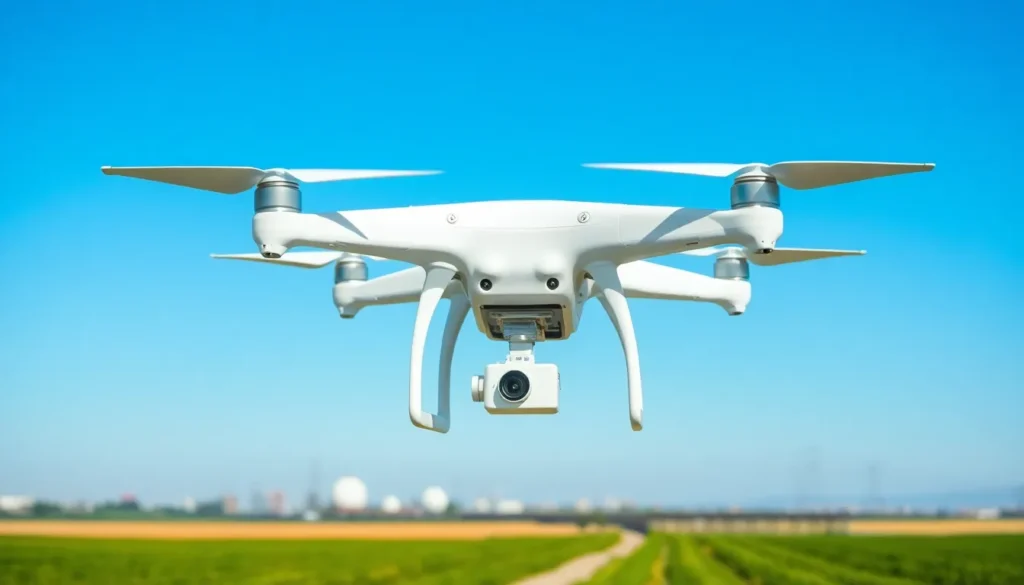
Most consumer drones use electric motors powered by lithium-polymer batteries. Quadcopters, drones with four rotors, are the most common design. Each rotor spins at different speeds to control movement. Spinning opposite rotors faster than others allows the drone to tilt and move in any direction. Fixed-wing drones work more like traditional airplanes, using forward thrust and wing lift for flight.
Communication and Control
A pilot controls the drone through a radio transmitter that sends signals to the aircraft’s receiver. Modern drones often include GPS modules for position tracking and automated flight features. Many can follow preset waypoints, return home automatically when battery runs low, or hover in place without pilot input. First-person view (FPV) systems transmit live video from the drone’s camera to the pilot’s screen or goggles, giving an immersive flying experience.
Types of Drones
Drones come in several categories based on their design and intended purpose.
Multi-Rotor Drones
Multi-rotor drones are the most popular type for consumers and professionals. Quadcopters have four rotors, hexacopters have six, and octocopters have eight. More rotors generally mean greater lifting capacity and redundancy, if one motor fails, the others can compensate. These drones excel at hovering, vertical takeoffs, and precise movements. But, they typically have shorter flight times than other designs.
Fixed-Wing Drones
Fixed-wing drones look like small airplanes. They generate lift from their wings rather than rotors, making them far more energy-efficient. Some fixed-wing drones can stay airborne for hours on a single charge. Agriculture companies and surveyors prefer them for covering large areas quickly. The tradeoff? They need space to take off and land, and they can’t hover in place.
Hybrid VTOL Drones
Vertical takeoff and landing (VTOL) hybrids combine features of both types. They launch like a quadcopter, then transition to fixed-wing flight for efficiency. This design offers the best of both worlds, no runway needed, plus extended flight times.
Single-Rotor Helicopters
Single-rotor drones resemble traditional helicopters. They’re less common but offer strong lifting power and longer flight endurance than multi-rotors. Industrial applications sometimes use them for heavy payloads.
Common Uses for Drones
Drones serve a wide range of purposes across consumer, commercial, and government sectors.
Photography and Videography
Aerial photography was once expensive and required helicopters. Now anyone can capture stunning overhead shots with a consumer drone. Real estate agents use drone footage to showcase properties. Wedding videographers add dramatic angles to their work. Filmmakers create cinematic sequences that previously required massive budgets.
Agriculture
Farmers use drones to monitor crop health, spot irrigation problems, and even spray fertilizers. A drone can survey hundreds of acres in a single flight, identifying issues that would take days to find on foot. This precision saves water, reduces chemical use, and improves yields.
Infrastructure Inspection
Inspecting bridges, power lines, and cell towers traditionally required workers in dangerous positions. Drones can fly close to structures and capture detailed images without putting anyone at risk. Energy companies inspect pipelines. Construction firms track project progress from above.
Delivery Services
Several companies now test drone delivery programs. Medical supplies reach remote clinics faster. Packages arrive at doorsteps without delivery trucks. While still limited by regulations and technology, drone delivery continues to expand.
Search and Rescue
Thermal cameras on drones help locate missing persons in forests or disaster zones. Emergency responders can assess situations quickly before sending ground teams into potentially dangerous areas.
Drone Regulations and Safety
Flying a drone comes with legal responsibilities. Regulations vary by country, but most share common themes.
Registration Requirements
In the United States, the Federal Aviation Administration (FAA) requires registration for drones weighing more than 0.55 pounds (250 grams). Owners must display their registration number on the aircraft. Many other countries have similar requirements.
Airspace Restrictions
Drones cannot fly near airports, military bases, or other restricted zones without authorization. In the U.S., recreational pilots must keep drones below 400 feet in uncontrolled airspace. Flying over crowds, sporting events, or emergency response scenes is typically prohibited.
Licensing for Commercial Use
People who use drones for business purposes often need additional certification. The FAA’s Part 107 license requires passing an aeronautical knowledge test. Commercial pilots must follow stricter rules about flight times, visibility, and proximity to people.
Privacy Considerations
Drones with cameras raise privacy concerns. Many jurisdictions have laws against using drones to record people without consent. Responsible pilots respect neighbors’ privacy and avoid flying over private property without permission.
Safety Best Practices
Safe drone operation starts with pre-flight checks. Pilots should inspect propellers for damage, ensure batteries are fully charged, and verify GPS lock before takeoff. Maintaining visual line of sight prevents collisions. Flying in good weather conditions reduces accidents.